1. What does a child learn with a balance bike?
The balance bike is the perfect preparation for cycling. It helps children:
To train your balance
To control the steering
To improve coordination between eyes, arms and legs
Regulate speed independently
Children who spend a lot of time on balance bikes often have one Advantage of cycling, because they can already keep their balance safely.
2. When is the right time to switch?
The transition from balance bike to bicycle is individual, but typical signs of cycling maturity are:
Good balance – The child can easily roll on the balance bike, steer and even stand still without having to immediately put their feet down.
Coordination & Control – The child can avoid obstacles, corner and brake in a controlled manner.
Iinterest in bicycles – Some children express the desire to ride a bike on their own.
Security & self-confidence – The child feels comfortable on two wheels and is ready for new challenges.
Age recommendation:
- Most children alternate between 3 and 5 years to the first bike.
- Children with a lot of balance bike experience often learn to ride a bike more quickly.
3. Which bike size is right?
Choosing the right bike size is crucial for a successful transition. Here is a rough guide:
| Dude | Body size | Stride length | Bike size |
|---|---|---|---|
| 2-3 years | approx. 90-100 cm | 35-42cm | 12 inches |
| 3-4 years | approx. 95-105 cm | 40-47cm | 14 inches |
| 4-5 years | approx. 100-110 cm | 45-52cm | 16 inches |
| 5-6 years | approx. 105-120 cm | 50-55cm | 18 inches |
Important: The stride length is the best measurement for orientation! Your child should be able to touch the floor with their feet while sitting.
4. Training wheels – yes or no?
Many parents consider whether to use training wheels. But experts recommend directly without support wheels to start!
Why aren't training wheels ideal?
- They prevent children from training their natural balance.
- The child learns an incorrect posture when driving.
- The switch to “real” cycling is being delayed.
Better: A light bike with a low entry that gives the child that Allows quick support with your feet – so learning almost happens by itself!
5. How you can make the transition easier
Here are some tips to help your child learn to ride a bike quickly and safely:
Practice in a quiet place – A flat, soft surface (e.g. meadow or play street) is ideal.
Adjust the correct seat height – The child should reach the floor with both feet.
Practice without pedals first – If you initially push off with your feet (like on a balance bike), you will find your balance more easily.
Support, but not holding on – Do not hold your child on the handlebars or saddle. It is better to gently stabilize the child on the back.
Praise a lot and stay patient – Small setbacks are normal, motivate your child with positive reinforcement.
Conclusion: Every child has their own pace!
Switching from a balance bike to a bicycle is a big moment - but every child is different. Pay attention to the signs that you are ready to drive and dial in light, well-fitting bike for getting started.
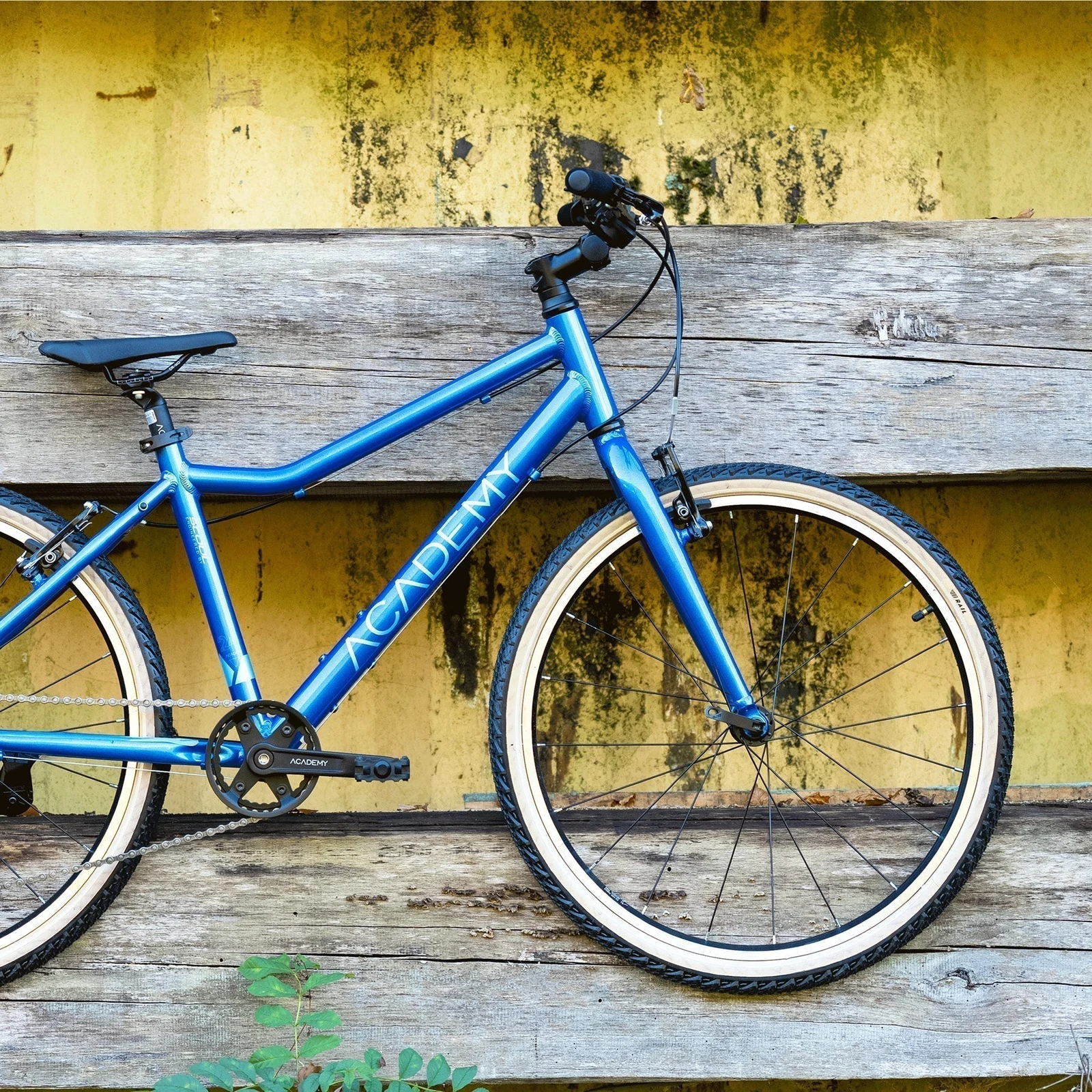
Tip: The lightweight children's bikes from ACADEMY-Bikes.de are ideal for little novice drivers - they make the transition easy and ensure a safe driving experience!